Why I Walked Away From a Climbing Partnership That Undermined My Worth
Climbing is where I go to feel free. It’s where I can challenge myself, find peace, and feel fully present. But sometimes, it also shows you exactly where your boundaries are being pushed, and who’s pushing them.
When the Partnership Looked Good on Paper
A few weeks ago, I invited someone new to climb with me. He was enthusiastic, strong indoor and crag climber, had completed a “learn to lead” course, and wanted to get out on mountain routes. We had climbed casually at the crag and at dry tooling sessions. Everything seemed fine at first.
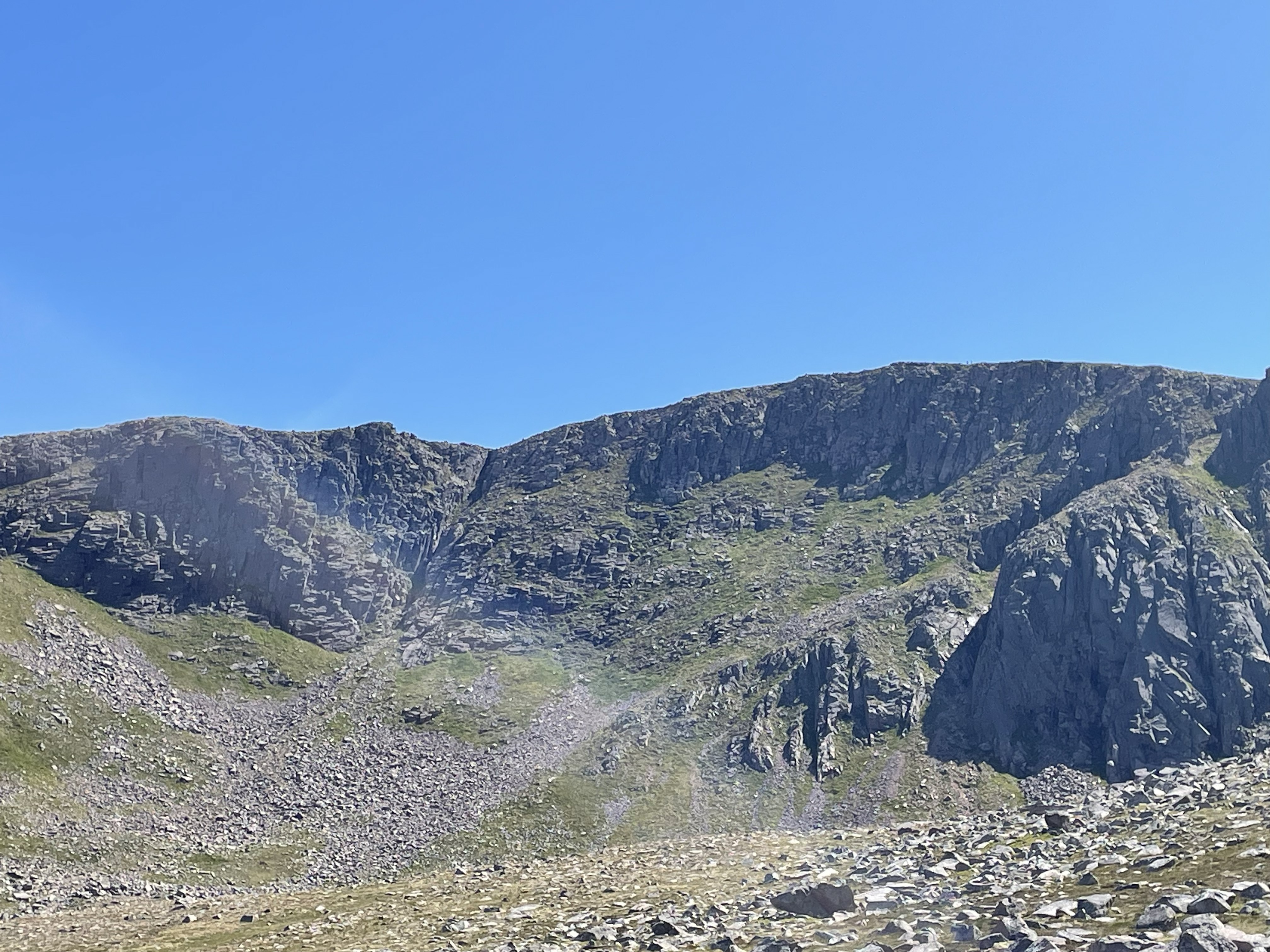
Then came a planned day on a summer trad mountain route in the Cairngorms. For me, this wasn’t just a fun outing. It was a strategic objective. I wanted to scope out a route for a future winter ascent. I had specific goals, a plan, and clear expectations. None of them were met.
Instead of climbing the route I had set my sights on, I ended up on a basic scramble, emotionally drained, and dealing with the fallout via text messages filled with guilt trips and defensiveness.
Red Flags: Dismissal, Deflection, and Disrespect
The signs were there, subtle at first:
- He resisted pre-climb planning, brushing off my request to discuss gear the night before.
- He arrived 90 minutes late, delaying our start.
- He pushed to change the plan in the car, suggesting alternatives that suited him.
- He brought excessive gear and was ill prepared, then complained about weight.
Even when I suggested a local crag as a backup plan due to the heat, he rejected that too. Eventually, we ended up on a Grade 2 scramble I had climbed several times in both summer and winter, and which he insisted on pitching as a multi-pitch route so he could “practice leading.”
Grade 2 scrambles are typically soloed. Roping up and placing protection in this scenario added unnecessary complexity and time in the blistering sun, especially when the original objective was a more technical, meaningful route.
I had already said multiple times that we would alternate leads as is common practice and a more efficient way of climbing multipitch routes. But when I arrived at the first belay, hearing him plan his lead on the next pitch, I had to assert AGAIN that I would lead the second pitch. He looked surprised and frustrated.
“Well, if you’d told me that, I would have built the belay differently.”
That didn’t make sense. I had been clear. The belays he built weren’t just unpolished—they were unsafe. On the first pitch, a sling was clipped directly to his harness without incorporating the rope to reduce shock loading in a fall, and the anchor points were so close they offered little to no load distribution.
Later, on the penultimate pitch, I heard a large boulder move and warned him to be careful not to dislodge it above me. I was still tied into my belay with no way to protect myself in a rock fall. He shouted, “Don’t laugh when you see this, I’ve had to get creative.” When I reached him, on terrain I could have walked up, I found a sling wrapped around three boulders, two of which were visibly loose and had shifted. The second anchor point was a nut connected by two quickdraws clipped together to extend the stance. There was no screwgate and no clove hitches—nothing that would make this setup secure, redundant, or suitable for building a belay.
This type of improvised anchor lacked locking connectors, stability under directional load, and a proper tie-in to the climber, making it dangerous even on easy ground. In more serious terrain, this could have had grave consequences in the case of a fall. We finished the route after this, but I was done—physically fine, but emotionally spent looking forward to my iced coffee and cake I expected to be eating in the late afternoon, not 7:30pm at night – 12 hours after leaving home.
Carrying the Weight. Literally and Figuratively
On the walk in, he checked the weight of my pack, commenting, “Oh, your bag is heavy too.” But he had spent the walk-in complaining about his own pack, which turned out to be heavier because he had packed for cold, wet weather, despite a 30°C summer forecast. He brought gloves, multiple layers, and a jacket, but didn’t bring enough water or any real food, just a couple of melted protein bars. Meanwhile, I had packed appropriately for the day’s objective and conditions.
I also had to insist, repeatedly, that we use my matched set of dry-treated 60-meter twin ropes, specifically chosen for the mountain route we had agreed on. He kept saying he would bring his rope, even though it was mismatched in length and type, and I had been clear several times that my matching ropes were more appropriate. I was blatantly being ignored! He made offhand comments like, “I get to try out all my new gear,” as if the plan had already changed without discussion. It felt presumptive and dismissive of my role in the partnership. I had prepared, clearly communicated the plan, and repeated expectations several times. Yet he pushed forward with his own unspoken agenda, without consulting me. That lack of dialogue showed a disregard for shared decision-making and mutual respect.
Because he refused to commit to a plan the night before, we ended up hauling two full ropes and a full rack—gear appropriate for a proper mountain route, but completely excessive for the easy scramble he ultimately pushed for. He had no intention of doing what we had originally agreed on and had only make this apparent when we were halfway to the mountain route with refusing to continue on the walk to get there. The burden of preparation, both physical and mental, fell on me. And when it came time to move, we were hours behind schedule after a long drive, time lost to indecision, disorganisation, and repeated negotiations.
This experience reinforced how essential it is to plan gear and logistics with your partner in advance, as equals. Clear mutual agreement about the objective, the route, and what each of you carries ensures that both climbers are respected, the load is shared fairly, and no one is left compensating for someone else’s disorganisation.
Pushed Into a Role I Didn’t Choose
At the crags, he led every route. I stayed polite, giving space. But it quickly became clear that I was spending my time mentoring and supporting, without being asked or acknowledged. When he backed off a climb and I took the lead, easily sending, he looked stunned. He brought it up repeatedly in disbelief, as if I had embarrassed him.
Before that day in the mountains, the signs were already there. I shared my knowledge openly, pointing out placements, building belays, walking through systems and pointing out areas of improvement based on what I had learned from qualified instructors and more experienced climbers over the years. But that effort was never reciprocated. It was one-directional, and over time, I felt less like a partner and more like a resource.
He also sent frequent photos and videos of his own climbing, often in search of praise. I began to feel less like a climbing partner and more like an audience, someone expected to validate his efforts without receiving the same attention or encouragement in return. While I offered insight, support, and guidance, there was little reciprocity. The emotional dynamic became unbalanced, and my presence seemed more useful to him as a mirror for his progress than as an equal teammate. This is something many women will recognise: being cast in the role of cheerleader rather than partner.
Despite these red flags, I gave him the benefit of the doubt. I assumed we could move forward with clearer expectations. But when I calmly raised concerns after our mountain day about the imbalance and safety risks, his response made it clear that mutual respect was never part of his plan:
“If you feel like you’re holding my hand too much, there’s plenty of other people out there to climb with.”
That response hit hard. It wasn’t accountability. It was a dismissal, wrapped in passive aggression. I had raised valid safety concerns and shared them calmly with suggested training and development options, but instead of a conversation, I received an unprovoked dressing down. It made me feel small and unseen. And it confirmed what I had been slowly realising: this was not someone I could trust to build a mature, respectful climbing partnership with.
This moment was pivotal. Women are too often expected to stay quiet, protect others’ feelings, and absorb poor behaviour to avoid ‘drama.’ But that silence costs us. It erodes our confidence, wastes our energy, and chips away at the joy we came here to find in our adventures. More critically, tolerating disrespect or manipulation in the mountains, where trust, preparation, and shared decision-making are lifelines, can lead to serious consequences. It is not just emotional; it’s about safety. This is not what equality looks like, and it is okay, essential, even, to say no more.
Emotional Labour in the Mountains
The day I planned was carefully chosen to help me prepare for a future winter ascent. Instead, it was overtaken by someone else’s agenda. If he never intended to do the route we agreed on, he should have been honest. I could have climbed with someone who shared the objective. In fact, on my walk out of the coire, I spotted two teams of fellow club members of the LSCC on climbs that day. One team climbing on the part of the mountain I had intended to climb.
Instead, we walked all the way into the coire only for him to abandon the plan and push his own. I lost more than just a climb. I lost time, energy, and the sense of purpose I had built into the day. I came down sunburnt and emotionally drained, not from the effort, but from disappointment. He finished the day thrilled with his own achievements, which felt minor compared to what I’m capable of. At one point, I was so disengaged I tied myself off, began to text home, give an update on my progress, and took selfies while my partner tried to excavate a poorly placed nut at his belay. It became his day, not mine.
Climbing should be challenging, rewarding, and equal. But this day reminded me how often women carry invisible labour:
- Planning and managing logistics
- Navigating someone else’s ego
- Handling emotional fallout
- Being treated as support instead of a peer
He claimed to be experienced, using jargon and referencing past climbs, but the skills didn’t hold up when it counted. He ignored guidance, resisted feedback, and underestimated my competence. This wasn’t about lack of experience. It was about control and a lack of respect.
When he invited me on a trip to Wales, I made it clear I’d go to climb and lead as an equal—not to second and teach. I suggested he build his skills first through rope work and belay training or even just by getting more varied crag experience. Not because I needed it, but because I needed to know I was tying in with a competent, prepared partner. Instead, he deflected. He told me he had learned to lead in Wales and implied I’d be the one catching up because I hadn’t climbed there before. It felt like another play to assert dominance.
I’ve invested years into becoming a strong, safe climber. I’m not an expert, but I take my development seriously. I read, watch official training videos, attend training and refreshers regularly and climb with people more experienced than me. And then I practise. That’s the standard I hold and expect. When we got on the climb, it was obvious he hadn’t done the same, even after I’d encouraged it. This isn’t about ego. It’s about trust, safety, and equal commitment.
I Am Not Your Second
I was clear about what I wanted. I communicated expectations. I compromised on plans. What I received in return was resistance, disorganisation, and emotional coercion.
When I stepped back and said, “No more,” I was met with a barrage of manipulative messages. For simply suggesting he work on key skills before tackling bigger climbs or a trip to Wales, I was accused of overstepping. He questioned my judgment, suggested I needed someone “more knowledgeable,” and then circled back with an offer to help with dry tooling and a vague apology about “misreading” my messages.
That is not resolution. That is gaslighting. It is a form of emotional abuse that many women experience—often subtle, often dismissed. It’s about regaining control, not repairing a relationship. It plays on our social conditioning, hoping we will doubt ourselves, apologise for speaking up, or retreat to keep the peace.
This dynamic is common. It thrives in spaces where women are expected to shrink, to absorb discomfort, and to protect others’ egos. In climbing, it shows up when men assume authority, deflect responsibility, and challenge our competence the moment we assert ourselves.
I have trained. I have invested time, money, and energy into becoming a safe, competent climber. I am not new to this. I hold myself to a high standard, and I expect the same from those I partner with. When those expectations are repeatedly ignored or twisted into accusations, that’s not miscommunication. That’s abuse.
I almost let it make me doubt myself. I almost believed I was too harsh, too critical, too much. But I wasn’t. I was clear. I was fair. And I was right to walk away.
This was the final straw, not because it was the first sign, but because it was the last in a pattern of boundary-pushing, control, and manipulation. I will not let that diminish me.
I walked away not because I’m difficult or dramatic, but because I know my worth. I belong here. We all do. And we don’t have to put up with this kind of behaviour to prove it.
For the Women Who’ve Been There
If you’re a woman who has ever:
- Bitten your tongue to protect someone else’s ego
- Been cast as the support instead of the equal
- Felt gaslit or manipulated for asserting your boundaries
- Been made to feel like the problem for naming a safety concern
You’re not imagining it. And you are not alone.
This kind of behaviour is not a misunderstanding. It’s not a miscommunication. It’s a pattern and it’s part of a larger culture that has long expected women to stay small, silent, and grateful for the bare minimum.
We don’t exist to absorb others’ insecurity. We belong here. Fully. Loudly. Deservedly.
We get to lead. We get to set boundaries. We get to walk away.
Have you ever had to stand your ground in a partnership that didn’t respect you? Share your story below. This is our space of clarity, honesty, strength, and sisterhood.

Leave a Reply